CTXA 561
Journal
Week 1 - Narrative Structures
This weeks topic was really interesting, because we got to watch a lot of films that had a specific narrative structure to it, which got me interestd, because I got to see films that I generally had not heard of before. I generally realy like watching films with a narrative structure, so i thought this weeks films would be interesting. The 2 films that stood out to me were "The Burden" and "Forever Green"
When I watched The Burden, I was struck by how deceptively gentle it felt. The miniature stop-motion sets, supermarkets, hotels, and office spaces look controlled and almost charming, but the musical numbers reveal a deep exhaustion beneath that surface. The anthropomorphic animal characters sing about routine, burnout, and quiet despair, and what affected me most was the restraint. There’s no dramatic breakdown or rebellion. The sadness is calm, normalized, and cyclical. The slow pacing and soft harmonies made the emotional weight feel heavier. It left me reflecting on how people can exist together in shared commercial spaces yet feel completely alone. Even though this film was amazing to watch, I did feel bit disturbed watching it, as everything in the film was very unexpected, which in a way did give it a charm to it, but the music with the visuals was a bit hard to watch.
In contrast, the film Forever Green felt immersive and constantly transforming. Instead of contained spaces and controlled movements, this film flows organically, with bodies merging into plants and landscapes dissolving into figures. The overwhelming green tones and fluid morphing forms made me feel like identity in this film is unstable and evolving. Where The Burden feels stagnant and cyclical, Forever Green feels alive and in flux. Watching both, I felt like they approach emotional states differently. One through stillness and quiet repetition, and the other through transformation and continuous motion — yet both explore what it means to exist within systems larger than oneself. I personally did enjoy watching Forever Green a lot more, because of the beautiful colors used, and the message of the film was also really powerful.
Overall, I did enjoy this weeks discussion on the films a lot. It was interesting to hear what everyone thought of the various films.


Week 2 - Non- Narrative Structures

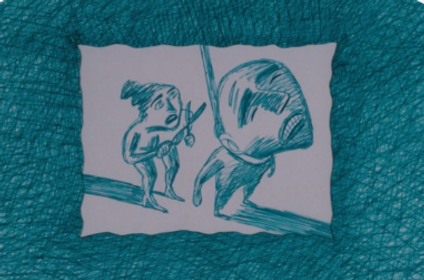
This weeks discussio was on Non-Narrative structures in animation. I think this was really interesting, because a lot of the films that we saw were really unique, and visually really appealing. What I liked the most about this presentation was the idea of continuum. How abstraction and narrative exist on a spectrum rather than in opposition, that really resonated with me. The idea that categories should serve as a roadmap rather than a constraint shifted how I think about experimental animation. I often feel like I have to choose, either something is narrative or abstract, but based on what was discussed, it reminded me that the two can overlap, blend, and inform each other.
I also loved the emphasis on texture, grain, and materiality in the independent animations shown. Especially in the discussion of Blood of the Family Tree. What texture can do emotionally that a “clean” image cannot really stood out to me, because I had never thought of that before. I personally respond strongly to imperfection in animation. Visible paper edges, rubber stamps, and hand-drawn inconsistencies. Those qualities feel human. They feel vulnerable. A polished commercial image can be impressive, but textured imagery feels intimate. It carries the artist’s hand, which makes you connect a lot more with the artist as well.
Another part that stayed with me was the idea of Visual Music. Visualizing music as it sounds, and what you think music looks like. That mindset excites me because it frees animation from literal storytelling. It makes rhythm, pacing, repetition, and contrast the main drivers instead of plot. I’m drawn to work where I don’t fully “understand” what’s happening in them, but what I feel in that work. The feeling of being able to experience a certain work, instead of literally understanding everything the work is trying to say is what draws me to non-narrative work.
Week 3 - Documentary and Autobiography


What I liked the most about this week's talk was contemplating the question “If there is no actual footage, can it still be a documentary?” That question immediately unsettled my assumptions. I’ve always associated documentary with camera-based evidence, like real people, real events, proof, real sounds, etc. But this presentation pushed me to reconsider what “real” actually means in film.
The metaphorical mode of storytelling resonated with me a lot. In "Our Uniform" and "Teacups", metaphor seems to document structural or social realities rather than literal events. That feels just as important, if not more so.
I was especially drawn to what Subjective Mode is as well. The idea that animation can visualize memory, emotion, and psychological reality feels very aligned with the kind of work I’m interested in. In the work "In Ryan", the physical distortions aren’t trying to mimic reality. They’re expressing internal damage. That feels more truthful to me than a clean, realistic live-action interview would. It’s not about surface accuracy; it’s about emotional accuracy. The same applies to Egg. What is being documented there isn’t an event, but a bodily or emotional state. That expands what “documentation” can mean, and this is also something that can only be shown through animation. Animation has the power to bring out inner emotions and memories that can't generally be shown through live-action footage.
Overall, I feel like documentary storytelling can be a very powerful tool to tell stories of issues around the world, and animation is the perfect medium to do that, because a lot more can be told through animation, which sometimes could be likely censored, if it's shown in live action.
Week 4 - Women Creators and themes
What I liked the most about this week's presentation was how clearly it connected form, politics, and technology. It didn’t just talk about women creators historically, but showed how aesthetic strategies themselves become tools of resistance.
The slide that stayed with me early on was the idea that women were historically confined to technical roles like “inking” and “coloring,” with little access to authorship. That framing made the later sections feel even more powerful, especially the shift described from woman as an object to woman as a subject. That line from Paul Wells about women’s animation marking a shift toward subjectivity really resonated with me. The idea that women become narrators of their own experiences, owners of desire, and decision-makers of form feels foundational. It’s not just about representation. It’s about control over representation.
The explanation that trauma is fragmented, repetitive, and nonlinear, and that animation can distort bodies and break time, felt incredibly accurate. Animation’s ability to visualize the subconscious makes it uniquely suited to expressing experiences that are otherwise silenced. That idea connects strongly to the idea that visualizing trauma is a prerequisite for subjectivity to emerge. That feels important. Expression itself becomes political.
But what I found most intellectually stimulating was the mention of Cyberfeminism and Xenofeminism. The claim that technology is not neutral, but embedded with gendered and racial power structures, reframes digital media as a contested space rather than a neutral tool. Xenofeminism’s idea of “gender abolition”, treating gender as a system of power that can be engineered differently, challenges conventional feminist approaches. I don’t know if I fully agree with abolishing gender entirely, but I appreciate how strategic and structural the thinking is. It’s not just about identity politics.It’s about system redesign and choice.


Week 5 - Centering Racial, Cultural, Ethnical and Religious Identities


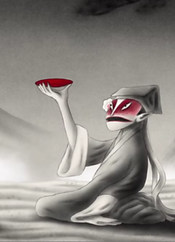


What I liked the most about this presentation was actually the process of working on and presenting the Indian and African animation sections, because it made me think more deeply about how identity shapes not just stories, but the way stories are told. I loved the challenge of finding new films to show everyone, and through this process, discovered a lot about Indian animation that I had never discovered before.
While researching the Indian animation section, I was really struck by how layered the industry is, moving between mythology, commercial animation, and independent work. I found the contrast between mainstream studio work and the independent scene especially interesting. Independent studios like Studio Eeksaurus, pushing toward contemporary social themes, made me realize that Indian animation isn’t just rooted in tradition, but is actively evolving. In Wade, even though the film is about climate change, it didn’t feel limited to that. It also speaks about class, survival, and power. What I liked most is how a very local story (set in Kolkata) can still feel globally relevant. It made me think about how identity-based storytelling doesn’t have to be niche; it can be expansive.
Presenting these sections also made me more aware of how identity is not just content, but form. For example, in both Indian and African animation, there’s a strong connection between storytelling and lived reality. Whether it’s environmental crisis, social inequality, or beauty standards. These aren’t abstract themes. They’re embedded in everyday life, and animation becomes a way to process and communicate them.
At the same time, seeing the other sections like Indigenous, European, and Chinese helped me understand a lot about how animation is approached through different parts of the world. Across the entire presentation, there was a shared idea that animation can reclaim history, question dominant narratives, and express experiences that might otherwise be overlooked.
What I appreciated most overall is that the presentation made me reflect not just as a viewer, but as a creator. It made me think about my own work and how I choose stories, what perspectives I center, and how I can use animation more intentionally to engage with identity.
More than anything, presenting this made me realize that animation isn’t just about telling stories. It’s about positioning yourself in relation to the world, and deciding what needs to be seen, remembered, or challenged.
Week 6 - Queer animation
What I liked the most about this presentation was how it approached queer identity not just as a theme, but as something that shapes performance in animation. Right from the beginning, the question “What comes to mind when you think of the word ‘queer’?” made me reflect on my own assumptions. It set up the idea that queerness isn’t fixed. It’s fluid, personal, and constantly evolving.
One part that stayed with me was the contrast between older representations and contemporary works. Looking at something like What’s Opera, Doc? alongside more recent films made me think about how queerness has historically been coded, hidden, or caricatured in animation. It made me realize how much queer representation existed in subtext rather than being openly acknowledged.
I also really liked how the presentation moved into more personal and intimate works, like Gigi, Acrobats, and Strokes. These films felt less about explaining queerness and more about experiencing it through emotion, relationships, and everyday moments. It made me think about how queer storytelling doesn’t always have to be overtly political to be meaningful; sometimes it’s about beautiful personal experiences.
The discussions around community and cultural context also stood out to me. The slides asking how community shapes queer identity made me think about how queerness isn’t experienced in isolation. It’s influenced by culture, geography, and social structures. That idea added another layer to the presentation, showing that identity is always relational.
What I appreciated most overall is that the presentation didn’t try to define queerness individually. Instead, it embraced its complexity through different films, styles, and approaches. It showed that queer animation can be experimental, narrative, abstract, personal, or political, and sometimes all at once.
More than anything, this presentation made me realize that animation is uniquely suited to exploring queerness because it allows for fluidity, transformation, and ambiguity. It doesn’t have to follow the rules of reality, and because of that, it can represent identities that also don’t fit neatly into fixed categories.
Week 7 - Animation for all bodies and Minds


What I liked the most about this presentation was how it completely reframed the idea of “normal.” The opening questions — “What is normal?” and “What is disability?” — immediately made me realize how much of what we consider “normal” is socially constructed. It set up the rest of the presentation in a way that felt both philosophical and deeply personal.
The section on physical disability, especially Orgesticulanismus, stood out to me a lot. The idea that the loss of movement can be reimagined through animation felt incredibly moving. What I found most interesting is how exaggerated gestures can function both as expression and limitation at the same time. It made me think about how animation can visualize something that is otherwise invisible or inaccessible.
I also liked the section on synesthesia. The idea of translating one sensory experience into another, like “hearing color” or “feeling sound,” felt like a perfect example of what animation can do that other media can’t. It made me think about how perception itself can be expanded, and how animation can create entirely new sensory experiences rather than just being able to represent existing ones.
I liked how animation could be used to represent trauma as memory, and something that shapes relationships. The use of metaphor, nature, and shifting visuals made the films unique.
What I appreciated most overall is the central idea presented toward the end: that animation doesn’t just represent disability, it reconfigures what counts as perception, embodiment, and subjectivity. That idea really stayed with me. It suggests that disability isn’t something outside of “normal,” but something that exposes how unstable and limited our definition of normal actually is.
More than anything, this presentation made me think about animation as a tool for empathy and the shifting of perception. It’s not just about showing different experiences, but about allowing viewers to inhabit different ways of sensing and understanding the world. This was something i picked up from watching the film Sensory Overload by Miguel Jeron


Week 8 - Battle of the Studios


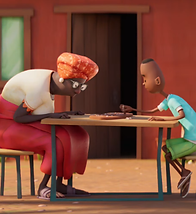


I was especially drawn to the contrast between Framestore and Elastic because it made something very clear to me: animation can either try to disappear or make itself visible. The distinction between photorealistic integration and stylized expression really stood out. Framestore’s approach, where VFX becomes almost invisible, feels like it’s trying to serve the narrative without drawing attention to itself. In contrast, Elastic’s work embraces design, abstraction, and symbolism as a core part of storytelling.
What I found most interesting was how this difference plays out in the title sequences. The analysis of Game of Thrones was really interesting. When the presentation moved to House of the Dragon, showing power as blood and later as tapestry, it felt like a shift from structure to biology to history. That evolution made me think about how animation can carry thematic meaning even before the story begins. It made me admire how beautifully films are introduced through their title sequence.
The section on Triggerfish was also really interesting to me because it brought in a completely different perspective. Instead of focusing on technological scale or conceptual abstraction, it emphasized representation and global storytelling. The idea that Triggerfish is helping place African animation on the global map felt important.
I also appreciated the section on Shanghai Animation Film Studio, especially its focus on integrating traditional art forms like ink painting and paper cutting into animation. That idea of preserving cultural identity through form really resonated with me.
More than anything, this presentation made me reflect on where my own work sits within these approaches. Whether I’m drawn more toward visible expression, conceptual systems, or culturally grounded storytelling. It made me realize that these choices are not just stylistic, but philosophical.
I also really enjoyed listening to the way the different studios work, and it helped me understand the different types of studios from around the world, the type of work each studio creates, and how different each studio is in terms of style and how the studios draw from the culture of their region.
Week 9 - Crafty Animation
What I liked the most about this presentation was the idea of “crafty animation as an analog reaction to the digital revolution.” That framing immediately stood out to me because it positions these techniques not just as aesthetic choices, but as a kind of resistance. It made me think about why artists choose to work with physical materials in a time when digital tools are dominant.
I was especially drawn to the section on direct animation. The idea of working directly on film, treating it either frame by frame or as one continuous canvas, feels very raw and immediate. What I liked most was how the medium itself became part of the meaning. It doesn’t just illustrate the story; it shapes how the story feels.
The work by Justine Lai was really interesting, especially how materials like toner, bleach, and glitter are used on 16mm film. I found it interesting how one piece draws from pop culture, while the other engages with historical archival footage. It made me realize that crafty animation can move between personal, cultural, and political spaces very fluidly, simply through how materials are used.
I also really liked the hand-drawn work shown, and the mixed-media animation, especially Wan Wan. The roughness and intimacy of the drawings made the film feel very personal. The presentation’s question about whether this tone could exist in another medium made me think a lot, and I feel like the answer is no. The imperfections, the uneven lines, the material presence, all of that contribute to the emotional weight.
The section on cutout animation and how found materials like advertisements and comic books are repurposed was interesting to watch. To be fair, I felt like the music video we watched in class was a bit slow, not something i would watch again, but it was interesting to see how cut out was used to tell a story.
More than anything, this presentation made me reflect on my own practice. Especially my interest in charcoal and physical materials. It reinforced the idea that choosing a medium isn’t just a technical decision, but a conceptual one. The material you work with becomes part of the story you’re telling.
That idea that material itself can carry meaning is what I liked the most about this presentation.


Week 10 - Sloppy Craft animation
What I enjoyed the most about doing this presentation was the experience of teaching the class and sharing these films, especially because sloppy craft is something that people often misunderstand at first. Starting with a simple question like “What do you think of when you hear sloppy craft?” made me realize how interesting it was to see everyone’s initial assumptions. I was pretty suprised that a lot of people didn't know what "Sloppy Craft" was, which made teaching the class a lot more interesting.
I really enjoyed showing the films by David O’Reilly, especially Please Say Something and Octocat Adventures. These works are so strange at first, and so different from each other, that it was really fun seeing how the class reacted to both in very different ways.
The same thing happened when I introduced Nikita Diakur’s work. I liked how the idea of “failure as a method”, which I had defined earlier, which became more tangible through his films. Showing Ugly and discussing whether it would feel different if it were “well-animated” opened up a really interesting space for conversation. I enjoyed seeing how people started questioning their own expectations of polish, control, and intention.
One of my favorite moments was sharing the work of Cyriak. the first time I watched his films was when I was making the presentation, and I had enjoyed watching his work a lot. His films are chaotic and overwhelming, and I think they bring a very immediate reaction of joy to the classroom. I could tell that people were both amused and slightly disturbed, and that tension made the discussion more dynamic. Asking whether the chaos is controlled or not, felt like a great way to push the class beyond just reacting to the visuals and into thinking about structure and intention.
What I appreciated most about teaching this is that it didn’t feel like I was delivering fixed answers. Instead, I was facilitating a shift in perspective. The questions throughout the presentation helped create a space where people could interpret the work differently, and I really enjoyed seeing those varied responses.
I honestly didnt know a lot about Sloppy craft animation before making this presentation, and I dont think this type of animation would have been my first choice to talk about, but watching everything that was possible through this type of animation made it really interesting for me.


Week 11 - Expanded Platforms


This week’s presentation was interesting because I really liked the installations that were shown in class. It felt quite different from what we’ve been seeing in previous weeks, especially because the work moved beyond the screen and into physical space. It definitely opened my eyes to different types of installations, including large-scale ones that completely transform the environment they’re in.
What I found especially interesting was how so many different components within a single installation worked together almost like a system or a machine. Each part on its own might feel simple, but when combined, they create something much bigger. An experience rather than just an artwork. I liked how these installations weren’t just meant to be looked at, but to be entered, walked through, and felt. That shift from passive viewing to active engagement really stood out to me.
I also found it interesting how installation art can control things like space, light, sound, and movement to guide how the viewer experiences the work. It made me think about how storytelling can happen without a clear narrative, just through atmosphere and interaction. In some of the works, the meaning wasn’t immediately obvious, but it became clearer through being present in the space and observing how everything interacted.
Another thing that struck out to me was the scale. Some of the large installations felt almost overwhelming, but in a good way. They made me think about how scale can be used to affect emotion, making the viewer feel small, immersed, or even slightly disoriented.
Overall, what I liked most is that installation art feels very experiential and immersive, and it pushes the boundaries of what animation or visual art can be. It made me think about how I could potentially expand my own work beyond a screen and into a space, where the audience becomes part of the piece rather than just observing it.
Week 12 - Games and Animation
This week’s presentation was really interesting to me because it made me rethink the relationship between games and animation, especially in a way I hadn’t considered before. I’ve always thought of them as separate animation as something you watch, and games as something you play, but this presentation challenged that distinction in a really clear way.
I found the section on Super Mario: Odyssey really interesting, especially the idea that animation functions as a form of information design. Things like anticipation before a jump or squash and stretch on landing aren’t just stylistic choices — they actually communicate important information to the player. I liked how the presentation explained that animation helps the player understand timing, momentum, and control. It made me realize that animation in games isn’t just about aesthetics, but about usability and interaction.
The concept of “game feel” was really interesting. The idea that animation shapes how a player perceives control and feedback made a lot of sense. It’s not just about what the game looks like, but how it feels to play. That connection between animation and physical sensation, even in a digital space, was really interesting to think about.
I think the part of the presentation which was the most interesting part for me was the way the 2 films one minute fly and the game time flies were compared. I thought it was interesting how films which are converted to games are re imagined, but also kept to the original theme of the film, and the way in which in the film, the animator decides how the film eds, and there is only one outcome, but in the game, the person playing the game gets to decide the outcome.
Overall, what I liked most about this presentation is that it made me see games not just as entertainment, but as a complex system of animation, interaction, and storytelling. It really expanded my understanding of what animation can be, especially when it becomes something you don’t just watch, but actively engage with.


Week 13 - Animation in the age of AI


This week’s presentation was interesting, but also a bit confusing for me in terms of how I feel about AI in animation. I liked that it didn’t just present AI as something exciting, but also brought up the concerns surrounding AI. That felt important, because I don’t think AI is something I can fully get behind, especially when it starts replacing the actual process of making.
I think that’s the main thing for me. A lot of AI animation feels like it skips over the part I value the most, which is the process. The labor, the material, the decisions you make while creating something. When AI generates images or motion so quickly, it feels a bit detached. It doesn’t feel like something that has been worked through.
But at the same time, I don’t completely reject it either. The example of The Song of Drifters actually made me pause a bit. That felt different. It didn’t feel like AI was doing everything. It felt like it was being used within a larger artistic intention. The emotions still came through, and it didn’t feel empty or overly polished in a generic way. That made me think that maybe it’s not AI itself that I disagree with, but the way it’s often used.
I also found the breakdown of how AI works, pretty interesting, especially the idea of images being broken into noise and then reconstructed. It made the whole thing feel less “creative” in a human sense, and more like a system trying to approximate something. Which again made me question where authorship really sits in that process.
The ethical side of it also made me uncomfortable, especially with things like deepfakes and replicating real people. It just feels like there’s very little control over how images and identities can be used, and that makes the whole space feel unstable.
I think where I’ve landed is that I don’t really agree with AI in animation when it becomes a replacement for making. But if it’s used more like a tool, something that supports or extends an idea, like in The Song of Drifters, then it can actually be interesting. It just depends on whether the work still feels intentional and personal.
I guess what stayed with me the most is that AI makes you question what you actually value in making something. For me, it’s still the process, the imperfections, and the feeling that something has been shaped over time. And that’s something I still don’t see AI fully replacing.